


Our video filmed in Stirling
We filmed the city as we walked up the old town to the castle, passing the kirkyard and ending at the Wallace Monument. If you prefer to see before reading, everything is in the video.
Plan your trip: United Kingdom
Tours, tickets and day trips in London.
5% off with code PLANETEDECAROT
Booked on Trip.com — partner link.
Compare rental companies and book at the best price.
10% off with code PLANETECAROLOC
Booked on Trip.com — partner link.
Provided by Holafly, our partner.
5% off with code LAPLANETEDECARO
Booked on Holafly — partner link.
Why this city locked Scotland for three centuries
Stirling fits in a pocket, with barely thirty-seven thousand people, yet it has weighed more heavily than many capitals. The reason lies in geography: the city is planted right where the Highlands meet the Lowlands, at the last passable crossing of the Forth. Whoever held Stirling held the road north, and thus the country. It was here that William Wallace defeated the English at Stirling Bridge in 1297, and a couple of miles south that Robert the Bruce sealed the deal at Bannockburn in 1314. The castle plays a big part in this. It sits on a volcanic crag that overlooks the entire valley, visible from afar, and several Stewart kings lived there. Mary, Queen of Scots was crowned there at nine months old, in 1543, and her own son James VI was crowned just below, in the church of the old town. Two coronations in twenty-four years, on the same rock.


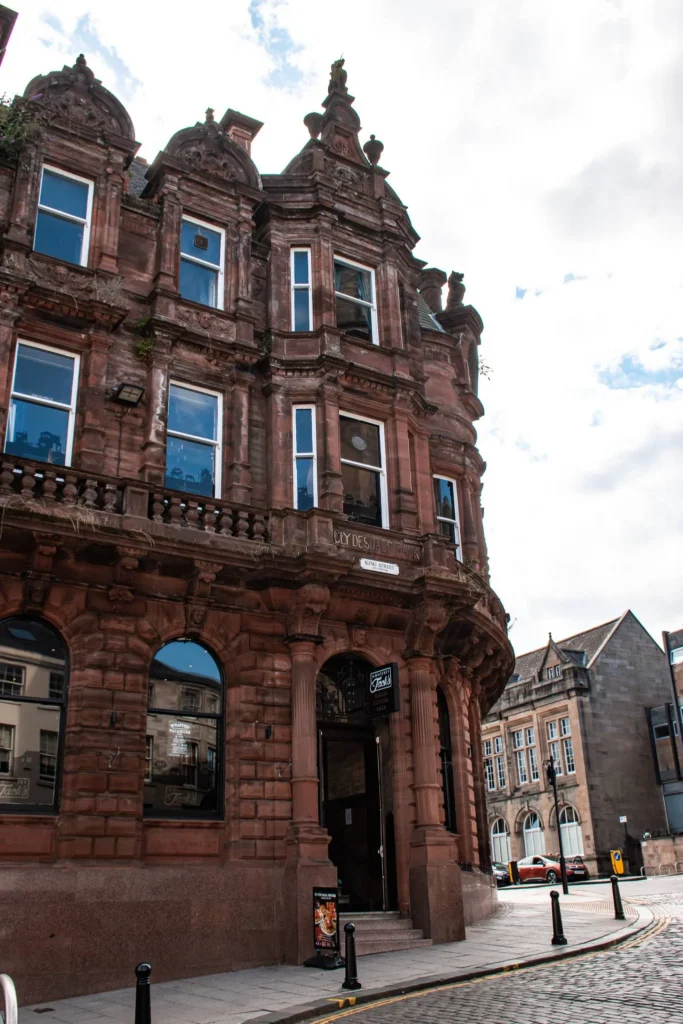
What strikes you upon arrival, when coming down from Glasgow like us, is the change in scale. Glasgow features long avenues and right-angle intersections that sometimes resemble an American city. In Stirling nothing is straight: the streets cross, fork, rise, and you understand in three minutes that you are in an old small town and not in a metropolis. The complete guide to the neighbouring city is there if you want to continue: visiting Glasgow on a road trip. A word about the stone, because we had written a mistake here too. We read “typical red sandstone of Stirling,” except that on site the palette is much broader than that. There is light sandstone, almost cream, much more reddish sandstone, and also dark stones like whinstone. The result ranges from mineral grey to ochre depending on the facade and the light, and it’s much more varied than the red postcard we had in mind.
How to get to Stirling
The city is so central that it falls on almost all Scottish routes. This is even its main logistical argument: you inevitably pass through.
When to visit Stirling
Stirling : a glimpse of the weather
5-day forecast
For spontaneous travelers ready to leave tomorrow, here's what to expect this week.
Monthly climate
Between us, we love sunshine and warmth. But not everyone shares our preferences, so here's the climate data to plan according to your wishes.
| Month | Min temp | Max temp | Rain | Weather | Rating |
|---|---|---|---|---|---|
| October | 7°C | 12°C | 110 mm | 🌧️ | |
| November | 3°C | 8°C | 182 mm | 🌧️ | |
| December | 2°C | 7°C | 143 mm | 🌦️ | |
| January | 0°C | 4°C | 107 mm | 🌧️ | |
| February | 2°C | 6°C | 87 mm | 🌧️ | |
| March | 2°C | 10°C | 95 mm | 🌦️ | |
| April | 2°C | 12°C | 92 mm | 🌦️ | |
| May | 6°C | 14°C | 77 mm | 🌧️ | |
| June | 10°C | 17°C | 163 mm | 🌧️ | |
| July | 11°C | 20°C | 53 mm | 🌦️ | |
| August | 11°C | 18°C | 94 mm | 🌦️ | |
| September | 10°C | 16°C | 125 mm | 🌧️ |
Temperate oceanic climate, like everywhere in central Scotland, with slightly more marked variations than on the coast because we are inland and therefore significantly less windy. From May to September remains the comfortable window, with May, June, and September being the best compromise between weather and crowds. In the height of summer, Stirling becomes a tourist hub, wedged between Edinburgh and the Highlands, and the castle gets crowded in the middle of the day. The real advice is simple: arrive at opening time. You will have the first half hour almost to yourself, and for the rest of the day, you will navigate among groups.
By van or motorhome: what we saw on site
We discovered Stirling by motorhome the first time, and the historic center seemed frankly complicated: narrow streets, steep slopes, turns that do not forgive the size. This observation still holds, but it deserves to be nuanced by what we observed upon returning. There were motorhomes parked everywhere, in the castle car park itself, and also in residential streets a bit away, near the suburban neighborhoods. People had clearly found their quiet spots, and no one seemed to be bothering them. Take this for what it is: a passing observation, not a permission. But in fact, tolerance is broader than announced as long as you remain discreet and do not block anyone. Here are the spots we had identified, and the map locates them all.
Stirling : Places we can tell you about
Here's our selection of places in Stirling: spots we've visited that might be useful to you. Use the list view to discover each address in detail, and export everything to add to Google Maps or your favorite GPS app.
| Place | Address | Download |
|---|---|---|
| Causewayhead Road | Causewayhead Road, Stirling, Scotland | |
| Ballengeich Pass | Ballengeich Pass, Stirling, Scotland | |
| King's Park Rd | King's Park Rd, Stirling, Scotland | |
| Dumbarton Road | Dumbarton Road, Stirling, Scotland | |
| Raploch Road | Raploch Road, Stirling, Scotland |
| Place | Address | Download |
|---|---|---|
| Brea Scottish Restaurant | 5 Baker Street, Stirling, Scotland | |
| Cooks of Stirling | 78 Upper Craigs, Stirling, Scotland | |
| Friars Wynd Hotel and Wine Bar | Friars Street, Stirling, Scotland | |
| Hotel Colessio | 33 Spittal Street, Stirling, Scotland | |
| The Birds and Bees | Easter Cornton Road, Stirling, Scotland | |
| Hermann's | Mar Place, Stirling, Scotland | |
| Darnley's Coffee House | 18 Bow Street, Stirling, Scotland | |
| Tolbooth Café Bar | Jail Wynd, Stirling, Scotland | |
| Settle Inn, Stirling's oldest pub (and the ten seconds we spent wondering what we were doing there) | 91 St Mary's Wynd, Stirling FK8 1BU, Scotland | |
| Slanj-A-Va, Stirling: it was The Kilted Kangaroo until 2023 | Slanj-A-Va, 9 Upper Craigs, Stirling FK8 2DG, Scotland |
| Place | Address | Download |
|---|---|---|
| Stirling Castle: we walked away in 2022, we paid up in 2026 | Stirling Castle, Castle Esplanade, Stirling FK8 1EJ, Scotland | |
| The Wallace Monument, Stirling: nothing on earth remains but fame, and a rabbit in the car park | National Wallace Monument, Abbey Craig, Hillfoots Road, Causewayhead, Stirling FK9 5LF, Scotland | |
| Battle of Bannockburn Experience | Glasgow Road, Whins of Milton, Stirling, Scotland | |
| Stirling Smith Art Gallery & Museum | 40 Albert Place, Stirling, Scotland | |
| Old Stirling Bridge | Stirling, Scotland | |
| We came for the church, we stayed in the kirkyard | Church of the Holy Rude, St John Street, Stirling FK8 1ED, Scotland |
| Place | Address | Download |
|---|---|---|
| The Allan Park Hotel, the pub-hotel in Stirling where we finally had a proper night. | 20 Allan Park, Stirling FK8 2QG, Scotland |
| Place | Address | Download |
|---|---|---|
| Go Ape Aberfoyle | David Marshall Lodge, Aberfoyle, Stirling, Scotland | |
| Rednock Farm | Port of Menteith, Stirling, Scotland |
One last point of caution, learned at our expense elsewhere in Scotland: LPG is patchy and badly distributed, and continental bottles will not be refilled here. Plan ahead with a dedicated app before running out, and and bring an adapter if you intend to switch to British bottles.

We're Caroline and Xavier
We drive to a place, stay long enough to get it wrong a few times, then write the guide we wish we'd had: parking, timing, what's worth the detour.
Ce que vous souhaitez recevoir :
Internet and SIM card in the UK
If you are coming over from the continent, Brexit ended the roam-like-at-home arrangement and the bill shows it within a couple of days of working on the move. Coverage in Stirling is excellent, all operators have signal in the city center, so the only real issue is the cost of data. Beyond a few days, a local SIM card or an eSIM solves the problem.

Best UK SIM for a Scotland Road Trip: Highlands, Skye and NC500 Coverage
What internet connection to use during a stay in Scotland? Often questioned by travelers, we explored the various options available in Scotland in this comprehensive article. As always, each solution...
Read moreWhat to do in Stirling in one to two days
The city is organized around two high points that face each other, the castle and the Wallace Monument, with the old town stretched between the two. The simplest way is to do as we did: take everything in while walking up, stopping at each interesting sight.
Climbing the old town from Spittal Street
The first shop that caught our attention while tackling the ascent was neither a pub nor a kilt shop, but a Christmas store. Tinsel & Tartan, at 2 Spittal Street, with garlands and ornaments displayed in the window in the middle of August. In reality, it’s mostly a souvenir shop, but the fully embraced Christmas theme in the middle of summer made us laugh.


After that, we truly enter the old town. What strikes you is that nothing seems recent: not a facade betraying modern construction, even though one can easily imagine the renovated interiors when thinking of the winters here. The streets rise, twist, and the black lantern streetlights with four-sided glass finish setting the scene.


The contrast with our Portuguese daily life is almost comical. Here everything is green and damp, the sky is grey, and above all moss covers the stone walls all along the ascent. It’s a tiny detail but probably the one that most conveys the Scottish atmosphere, far more than the bagpipes from the shops below.


Halfway between the center and the castle, on St John Street, we come across the Stirling Old Town Jail. It is indeed an old prison, converted into an attraction with its original cells, tours about the history of crime and punishment, and an observation tower. We didn’t visit it, but it has the merit of being entirely covered if the sky closes in.


The Church of the Holy Rude is not a cathedral
This is the mistake we all make when seeing it from afar, with its tower and rose window: this large religious building dominating St John Street is a medieval parish church, still in operation. Our complete profile is here: the Church of the Holy Rude. Its name comes from “rood,” the Cross, and an altar dedicated there was founded by Robert II before the name came to designate the entire building.


The interior impressed us much more than the facade suggested. There are very beautiful stained glass windows, and above all an open timber roof that looks unlike anything we had seen elsewhere. The intuition was correct: the official inventory of RCAHMS describes nine main trusses and presents it as one of the few medieval roofs still standing in Scotland, erected shortly after 1450. A useful detail, because the parish sometimes presents it as the oldest hammerbeam roof in the country, which the technical description from RCAHMS does not confirm: the rarity is real, but the hammerbeam label does not hold. Its claim to fame is the coronation of James VI on 29 July 1567, at thirteen months, after the forced abdication of his mother, Mary, Queen of Scots. John Knox preached the sermon there. It is often read that it is, along with Westminster Abbey, one of the only two churches in the UK to have hosted a coronation and still be in service. This is false, there are three, with Gloucester Cathedral having crowned Henry III in 1216. The parish website actually states the exact version: the only one that remains in Scotland. Another thing we noticed without knowing what to think: the masonry of the tower is visibly pockmarked, with a cluster of clear impacts at the bottom left. Local tradition sees this as shots from the castle. RCAHMS mentions these marks but judges that this explanation is insufficient, so we point them out to you without determining the origin.
What we found behind the church
Honestly, we went up to see a church and spent most of our time in its kirkyard. Behind the Holy Rude, we find exactly the image one has of an old Scottish kirkyard: large engraved stones, leaning graves, and above all grass dominating everywhere, growing around the stones and sometimes over them. If you grew up walking through churchyards like this one, you will be on home ground. We were not, and the difference from the raked gravel we are used to is the whole effect: the place looks far older, and looks like it grew there. We read dates on the stones as we walked, mostly from the 19th century, and at least one much older. Some stones are so eroded that nothing is left readable. To give a sourced reference alongside our passing readings: the oldest stone in the old kirkyard is dated 1579. A small detail we owe to our own photos. The kirkyard is not one but two sets. The old kirkyard next to the church is the one with wild grass. The large lower part, with its regular rows and designed paths, is the Valley Cemetery, opened in 1857 because the old one overflowed to the point of disturbing existing graves. It contains the Star Pyramid and the Wigtown Martyrs’ monument, and together they now form the Old Town Cemetery.


The ground advice now, and it’s one we would have liked to read before going: don’t just cross the first rows. Go all the way up to the rocky hill. There’s a bench up there and a very nice view of the valley. This hill is called Ladies’ Rock, and it’s no coincidence that the viewpoint is good: it’s from there that the ladies of the court watched the tournaments held in the Valley, between the church and the castle. One must admit that the deceased have been rather well placed. It’s hard to say they rest in peace given the number of visitors passing through, stopping to photograph, including us, and some occupants must end up quite unintentionally on a bunch of photos on Instagram. As Xavier summarized on site, there are probably people willing to die to spend eternity here.
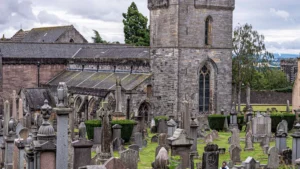
We came for the church, we stayed in the kirkyard
We came up to Stirling to see a church. We ended up spending most of the day in its kirkyard, and we are not going to apologise for it. The...
Read moreStirling Castle


Here is the main piece, and especially the place where we had accumulated the most approximations. The castle is perched on its volcanic rock about 250 feet above the valley, occupied since the Iron Age, and most of what we visit was built in the fifteenth and sixteenth centuries by the Stewarts. It is one of the largest castles in Scotland, and this formula is quite sufficient without needing to add Europe. All the details of the visit are in our sheet on the Stirling Castle. What is worth the visit, in the order we did it. The Casemates first, just after the entrance, with their panels and a large illuminated model that helps to understand the layout of the site before getting lost in it. The Queen Anne Garden next, on the left, whose flowers suddenly break the martial and severe aspect of the walls. One does not expect the first surprise of a fortress to be a colourful flowerbed. The Great Hall is the highlight of the tour, with its huge timber roof and five fireplaces. Built by James IV, it was still being plastered in 1503, roughly 138 feet by 47. Be careful though, and this is our biggest correction: that roof is not medieval. The original was dismantled in 1800 when the army converted the hall into barracks. The one we admire is a reconstruction completed in 1999, fifty-seven hammerbeam trusses made from green oak sourced from 350 trees in Perthshire, inaugurated by Elizabeth II on 30 November that year. The only genuinely medieval roof on this hill is the one in the church below. The Chapel Royal, on the north side of the inner courtyard, was commissioned by James VI in 1594 and built in less than a year for the baptism of Prince Henry, foreign ambassadors required. It was restored in the 1990s, so do not take what you see as intact, but the ceiling retains fragments of a decoration painted by Valentine Jenkin in 1628. The royal apartments complete the loop, with actors in costume explaining court life room by room, and it is much more lively than panels. Two useful clarifications. The Stirling Heads on the ceiling are recently sculpted replicas, the surviving originals being displayed separately, and the sculptor slipped in a completely invented head where he hid the portrait of his daughter. The tapestries of the Hunt of the Unicorn are also replicas, handwoven over about fifteen years, the originals being at the Metropolitan Museum of Art in New York. And then there are the passages under the arches, those we take without knowing where we will emerge. One of them leads to a small peaceful garden at the top of the rock, and we thought at the moment that the occupants must come here to seek five minutes of tranquility. Upon inquiry, it is the Douglas Garden, and it is named so because on 22 February 1452, James II of Scotland stabbed William, the eighth Earl of Douglas, who came under safe conduct, before his courtiers finished him off and threw the body out the window. The spot where he fell is still marked on the ground. Our quiet corner, then. One last detail for movie lovers, because it’s the question that always comes up: nothing from Braveheart was filmed here, and Castle Leoch from Outlander is Doune Castle, about eight miles away. The complete debunk is in our dedicated sheet.
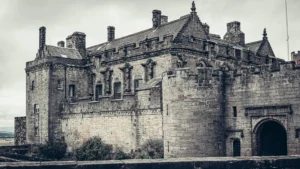
Stirling Castle: we walked away in 2022, we paid up in 2026
In 2022 we walked up to the gate of Stirling Castle, read the price board, looked at each other, and walked away. Four years later we came back specifically to...
Read moreWhy the Victorians built the Wallace Monument
On Abbey Craig, opposite the castle and visible from everywhere, the 220-foot neo-Gothic tower of the National Wallace Monument perfectly complements the fortress. From the castle, you can see it in the distance, and from the monument, you look at the castle: a natural shot/reverse shot that really helps to understand the geography of the area. We dedicated an entire sheet to the Wallace Monument. The location is not decorative. Abbey Craig is the height from where Wallace would have observed Edward I’s army gathering before Stirling Bridge in 1297, and an ancient fort with three ramparts still exists behind the tower. The construction site, however, is much more recent than one might think: competition won in 1858, first stone laid in 1861, inauguration on 11 September 1869, which is more than five centuries after Wallace’s death. It was entirely funded by public subscription, with donations coming from abroad, including one from Garibaldi. The detail that amazed us concerns the construction itself. We wondered how tons of stone were raised to the top of a hill in 1861: the answer is that they were not raised, they were extracted on site. The stone comes from Abbey Craig itself, the old quarries are still visible, and a small railway had been laid to transport materials and workers up the slope. The ascent is made on a paved path that crosses a beautiful forest, taking us about ten minutes at a good pace, and the steeper it gets, the closer you are to the goal. The sculptures that line the path are not mere decoration: it is the Wallace Way, a chronological frieze in cedar that goes from the Ice Age to the construction of the monument. A shuttle exists from the car park for those concerned about the climb, but it only replaces the hill, not the 246 steps of the tower. We did not go inside, we had to choose within the visit budget and preferred to spend the price on the larger castle. So we cannot tell you if the Hall of Heroes is worth the detour, we don’t know. The esplanade, the forest, and the panorama already make the ascent worthwhile, and it gives us a good reason to return.
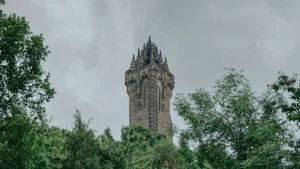
The Wallace Monument, Stirling: nothing on earth remains but fame, and a rabbit in the car park
The first thing that greets you at the foot of Scotland's national monument is not William Wallace, and it is not his sword. It is an entirely relaxed rabbit. It...
Read moreBank Street, Bow Street, Baker Street


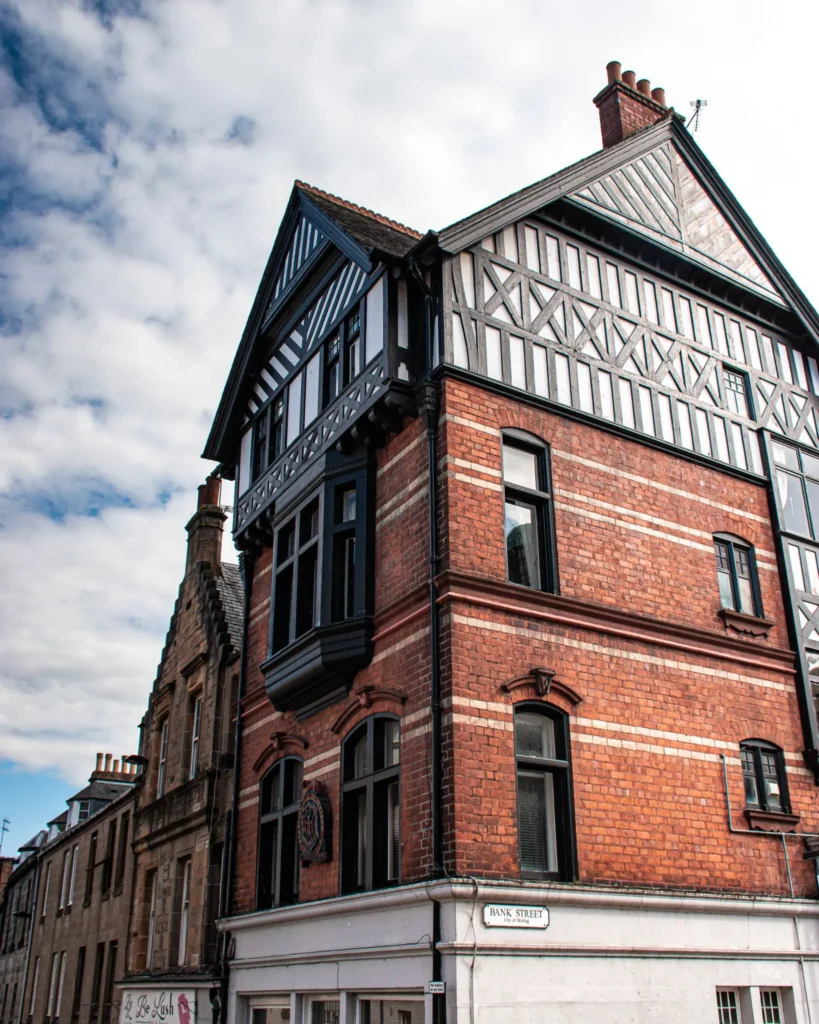
On the way down, the lower part of the old town has its own pretty things, more discreet. Bank Street and its black and white timber-framed building on red brick at the corner is probably the most photographed facade in the area, and we admit to having wandered around it for a while. On the side of Bow Street and Baker Street, it is the doors, the small-paned windows, and the old signs that do the work. As you descend, you will also pass by the Tolbooth, the former courthouse and prison of the city, and Mar’s Wark, this ruined Renaissance facade bordering the kirkyard. Independent shops, tea rooms, and bookshops are concentrated in this area, and an hour and a half of leisurely walking is enough to do the complete tour.
Bannockburn is visited indoors
A few miles to the south, the site of the battle of 23 and 24 June 1314, where Robert the Bruce defeated Edward II’s army seventeen years after Wallace’s victory at Stirling Bridge. The visitor center is built around an immersive three-dimensional reconstruction where we follow the confrontation from the perspective of a fighter. It’s designed for children but it works for adults too, and since everything is indoors, it’s the obvious backup plan on a rainy afternoon.
Stopping to grab a bite
Eating in Stirling is more expensive than in Arbroath or Stonehaven, thanks to historical tourism, and the pattern we’ve found all over Scotland applies here too: either you stick to pub food and reasonably priced street food, or you upgrade and the bill quickly adds up. The good news is that the rest, the walking, the scenery, the kirkyard, the old town, costs nothing.


For the pub, our favorite spot is the Settle Inn, on St Mary’s Wynd, up the hill. We walked in feeling like all the regulars were staring at us, and we came out with kisses and photos behind the bar. There’s a tiny fireplace at the entrance, three old curling stones in the hearth, a stone vaulted room at the back, and a jukebox playing, which you hardly see anywhere anymore. A word about its reputation, because we too had copied the legend. It’s said everywhere that it’s the oldest pub in Stirling, opened in 1733. The date of 1733 is indeed real, but it’s engraved on a lintel and the listing from Historic Environment Scotland ties it to the building, not the pub. The same document reveals that the establishment was previously called the Red Lion Inn, and its red lion sculpture is still on the facade. Another detail that matters: the Nicky Tams, on Baker Street, claims 1718. The sign of the Settle Inn is actually more cautious than the guides, stating “Stirling’s Oldest Alehouse.”

For a proper meal, we stumbled upon the Slanj-A-Va one Sunday evening, a hidden pub at the back of an inner courtyard, accessible by passing under a building. Very well-executed burgers, a menu written in Scots, and a Scottish dish slipped in among the junk food called Scheme Poutine, with haggis. The name of the place is the Gaelic toast Slàinte Mhath, which simply means “good health,” something we learned long after dining.


If you’re looking to sleep and eat in the same place, we spent two nights at The Allan Park, in a listed Georgian building in the center, with the pub and restaurant on the ground floor. The rest of the central addresses revolve around gourmet pubs and modern Scottish cuisine, with haggis reinvented pretty much everywhere, and a few nice surprises for those willing to venture off the main street.
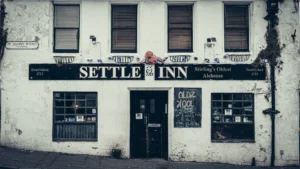
Settle Inn, Stirling’s oldest pub (and the ten seconds we spent wondering what we were doing there)
We walked into this pub wondering whether we were allowed to be there. We walked out being kissed on both cheeks. In between: one hour, two beers, and the kind...
Read more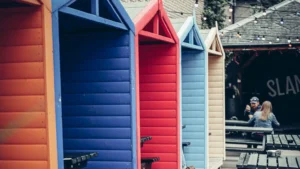
Slanj-A-Va, Stirling: it was The Kilted Kangaroo until 2023
There is a very particular feeling to a Sunday evening in a small town when you are looking for somewhere to eat and you watch the shutters come down one...
Read more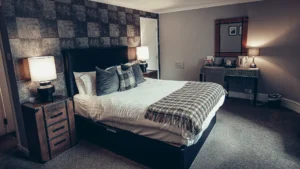
The Allan Park Hotel, the pub-hotel in Stirling where we finally had a proper night.
Our opinion on the Allan Park Hotel, a Georgian gem from 1818 right in the center of Stirling that also serves as a pub and restaurant. Eight rooms, a golden...
Read moreWhat budget to expect in Stirling
Quota RapidAPI dépassé (limite par minute/mois). Réessayez plus tard.
Stirling is above the Scottish average, mainly due to entry fees and dining. The two big expenses are the castle, which is frankly expensive but takes up half a day, and meals at restaurants. The Wallace Monument also has an entry fee, but the esplanade and the path do not, allowing you to enjoy the site. What makes up for it all is the free part. The old town, the climb, the kirkyard, Ladies’ Rock and its view, the forest walk at Abbey Craig: none of this costs anything. You can have a very nice day in Stirling by paying for just one entry, and that’s exactly the trade-off we made by choosing the castle over the tower.
We hadn’t even entered the castle the first time
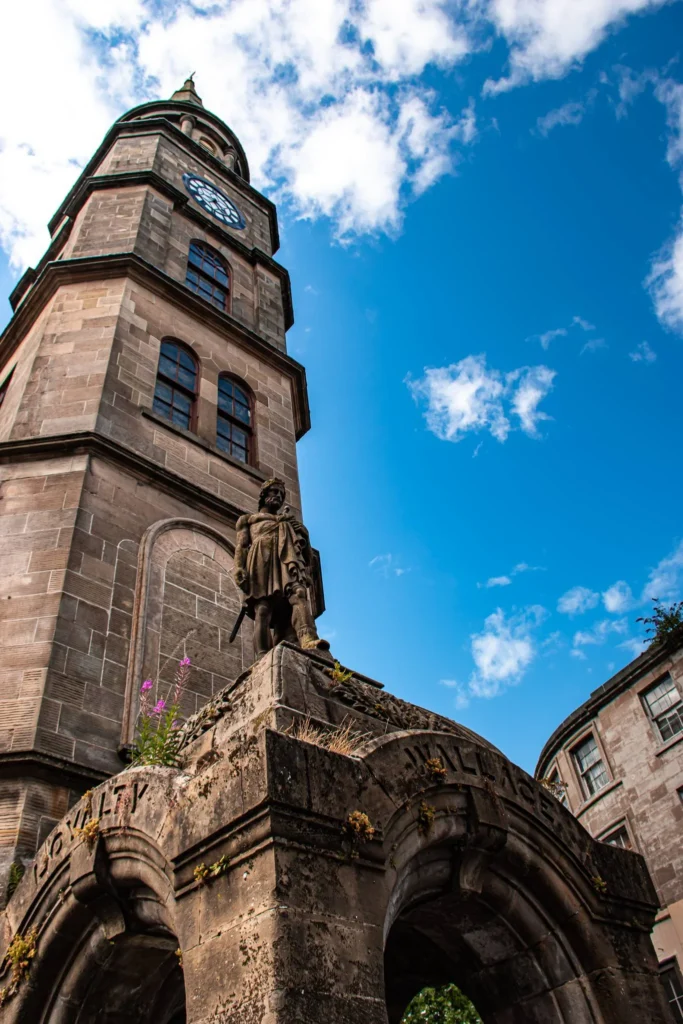
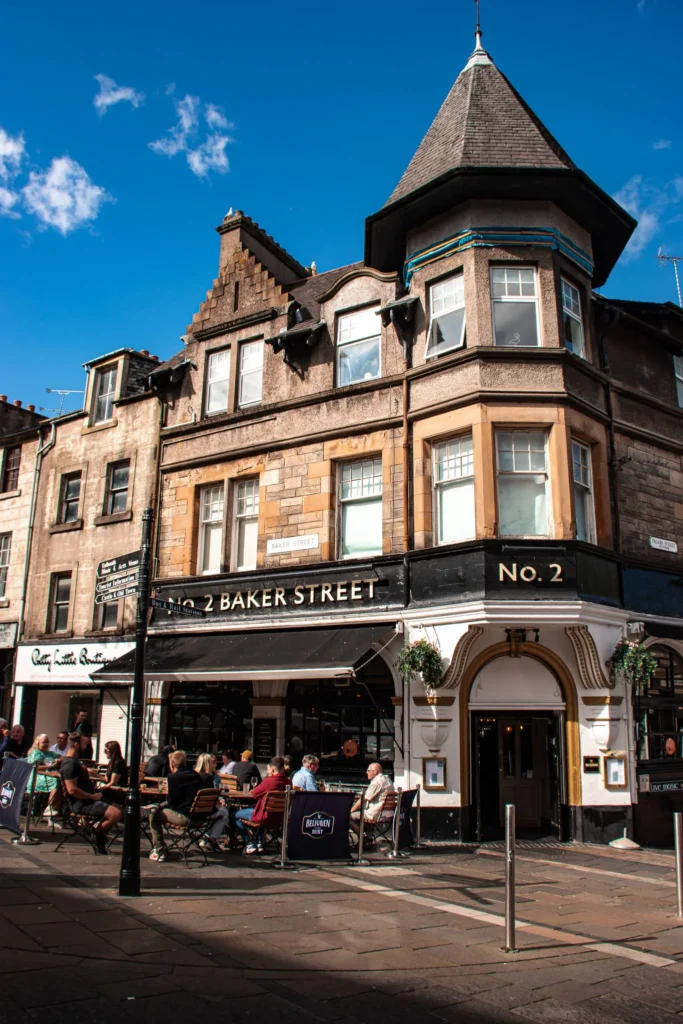

Backtracking to our first visit in a campervan. We arrived at the castle quite late in the day, read the pricing sign, and turned around. We were making much less money back then, the budget mainly went to food and the daily upkeep of the vehicle, and there was only an hour left before closing while the site requires three or four. We walked around the outside, enjoyed the panorama, and left with a real frustration: having come all this way without seeing what was behind the walls. It was this turnaround that explains why we returned to pay. Another memory from that first visit is Wallace. His name was everywhere, on pubs, statues, plaques, shopfronts, to the point that we ended up laughing: at this rate, it was becoming the Wallace Tour, just like elsewhere we had experienced the Napoleon Tour. We had just come from three days of cycling between Edinburgh and Glasgow, our thighs were sore, and we wisely left the bikes behind to do Stirling on foot. Given the slopes, it was the right choice.

There was also this kirkyard on a hill that we passed by, which we had nicknamed among ourselves the kirkyard of those who tried to ride up the hill on a bike without stopping. Dark humor from fatigue, which said a lot about the state of our legs after the previous days.
That day wanted to pile everything on at once. In addition to the breakdown, we were looking for LPG without finding any, our French gas bottles were unusable on site, and we were racing to find a service area to empty the toilets. We finally found a station after half an hour of driving, and the relief was worth a full tank and a wash right after.
The rest of Scotland, from Stirling
Stirling is the pivot of the country, so almost everything can be accessed from here. To the south are the two major cities, to the east the Fife peninsula and the coast, to the north the Highlands. Here are our guides to continue the journey, and all are based on experience, not compilations.
Discovering Edinburgh by road trip and van: Complete Guide
Discover Edinburgh in this travel guide for everyone, perfect for van road trip enthusiasts. Explore the history, budget, where to sleep, where to park, where to eat, and what to...
Read more
Glasgow by Motorhome: the City That Is Beautiful in Its Sadness
Head to Glasgow with this travel guide for Van RoadTrip fans. Explore history, budget, where to sleep, where to park, where to eat, and activities.
Read more
Discovering St Andrews on a Campervan Road Trip: Complete UK Guide
Cathedral ruins, the Old Course, Prince William's university and a windswept beach. Our UK guide to St Andrews by campervan in the Fife peninsula.
Read more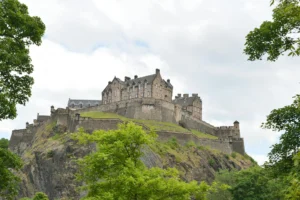
Visiting Fife by Campervan: Kirkcaldy, Dunfermline, Newport, Forfar
Itinerary for campervan in Fife (east coast of Scotland): Dunfermline, the former royal capital, Kirkcaldy facing the Firth of Forth, Newport-on-Tay with its Breton Bistro, Forfar and Loch Rescobie. Caravan...
Read moreIf you’re heading north rather than east, the logical next step is through the Trossachs and then the Cairngorms park, before tackling the NC500 and its lesser-known stops or heading towards the Isle of Skye. And if you’re traveling in the summer, take a look at the Highland Games calendar: there’s often one nearby, and it’s worth the trip.
Discovering Arbroath on a Campervan Road Trip: Complete UK Guide
Red sandstone cliffs, the famous Smokie, Arbroath Abbey and a working harbour. Our UK guide to Arbroath by campervan, with overnight spots, Smokie tasting and Angus coast walks.
Read more
Discovering Stonehaven and Dunnottar by Campervan: Complete UK Guide
Dunnottar Castle on its sea cliff, a working fishing harbour, the seals and the most photogenic ruin in Scotland. Our UK guide to Stonehaven and Dunnottar by campervan.
Read more
Visiting Aberdeen on a road trip: complete guide
Discover everything you need to know about Aberdeen with our complete RoadTrip travel guide! From history to weather, budget tips, and the best spots to sleep in a camper van,...
Read moreVisiting Stirling: your questions before you go
Stirling Castle or Edinburgh Castle, which one to choose?
If you can only do one and you're more interested in history than in the queue, take Stirling. It is significantly less crowded, you can move around without elbowing your way through, and the scenery is more generous: refurbished royal apartments, costumed actors in the rooms, Great Hall accessible. Edinburgh retains the advantage of being a symbol, with the Honours of Scotland and the Stone of Destiny, but you often move in single file there. The real argument for Stirling remains its position: the rock overlooks the valley where the Highlands meet the Lowlands, and you can physically understand why a fortress was built here.
Was Braveheart filmed at Stirling Castle?
No, and this is probably the most widespread belief about the city. Nothing from the film was shot at Stirling Castle. The sequence of the Battle of Stirling Bridge was filmed in the Curragh plain, in Ireland, over about six weeks, and mainly without the slightest bridge, while the bridge over the Forth is precisely the key to the actual tactics of William Wallace. In the same vein: the Castle Leoch from Outlander is not Stirling either, it is Doune Castle, about eight miles away.
Does the Stirling Bridge from 1297 still exist?
No. The wooden bridge where the battle took place was destroyed just after the clash by the English themselves. The one we cross today, the Old Stirling Bridge, is a much later stone bridge, dated around 1500, located about 185 yards downstream from the presumed site of the old one. It still stands and remains open to pedestrians and cyclists. A nice coincidence of timing by the way: the battle took place on September 11, 1297, and the Wallace Monument was inaugurated on September 11, 1869.
Is the Settle Inn really the oldest pub in Stirling?
It's more nuanced than what the facade suggests. The date of 1733 that everyone cites comes from an engraved lintel, and the listing sheet from Historic Environment Scotland (LB41467) links it to the building, not to the beverage service. The same document also reveals that the establishment was previously called the Red Lion Inn, and its sculpted red lion is still on the facade above the lintel. Another pub in the city, Nicky Tams, on Baker Street, claims 1718, which is fifteen years earlier. The Settle Inn itself remains cautious: outside, the sign reads "Stirling's Oldest Alehouse," the oldest tavern, not the oldest pub.
How much time should you plan to visit Stirling?
A full day covers the essentials if you walk well: the ascent through the old town, the Church of the Holy Rude and its kirkyard, the castle in the middle of the day, then the Wallace Monument. Allow three to four hours just for the castle if you want to read the signs and enjoy the performers, and an hour and a half to two hours for the Wallace Monument, including the ascent. If you add Bannockburn and a proper stroll through the old town, plan for two days: the city is small but everything is on a slope, and the pace is more affected than you might think.
Does the Explorer Pass from Historic Environment Scotland cover everything in Stirling?
No, and it catches people out. Stirling Castle is well managed by Historic Environment Scotland, so it's covered by the Explorer Pass. The Wallace Monument, however, is not: it is run by Stirling Council. The pass does not apply there in any way. If you are planning your trip around an Explorer Pass, plan for the Wallace Monument separately.
Can you visit Stirling without a car?
Very well, indeed. The station is in the town centre and connections from Edinburgh as well as from Glasgow are frequent and short. From the station to the castle, expect about half a mile, but half a mile that goes uphill: it's the old town that you are climbing, and that's precisely what makes the arrival at the castle interesting. The Wallace Monument can be reached by bus or taxi, followed by a walk up through the forest or a shuttle from the car park. The historic centre is entirely walkable, as cycling offers little due to the slopes.
Where to park in Stirling with a van or a motorhome?
The historic centre is not made for large vehicles: narrow streets, steep slopes, tight turns. The simplest option is to park below and walk up. The Cowane Centre Car Park, south of the historic centre, serves as a convenient base during the day. For the night with full services, the Witches Craig Caravan Park is a couple of miles east, near Blairlogie, at the foot of the Ochil Hills. Bridge of Allan, three miles north, is a quieter alternative during the peak summer season.
What is the Battle of Bannockburn?
It is the clash of 23 and 24 June 1314, a couple of miles south of Stirling, where Robert the Bruce defeated the army of Edward II. It occurs seventeen years after the victory of William Wallace at Stirling Bridge and marks a decisive turning point in the Scottish Wars of Independence. The site now hosts a visitor centre built around an immersive three-dimensional reconstruction, where one follows the clash from the perspective of a fighter. It is indoors, so it is also the obvious solution for a rainy afternoon.
How to connect Stirling and St Andrews on a road trip?
Count about an hour's drive via the A91, which crosses the Ochil Hills. It's a very peaceful and frankly pretty country road, but petrol stations are scarce: fill up before you leave. For those driving on LPG, anticipation is even more necessary than elsewhere, as LPG points are thin on the ground up here. This is the logical continuation to head towards the Fife peninsula and the east coast.
PS: the Wallace Tour is still very much relevant. We returned four years later and its name is still on half of the shopfronts in the city.
The next route, straight to your inbox
Two years of full-time van life, and the Algarve as our base ever since. We still hit the road, by van or otherwise, and we write up what we find along the way. An email when we have something to say, no more.
Ce que vous souhaitez recevoir :